Why Aged Care SEO Is Not Just About Keywords
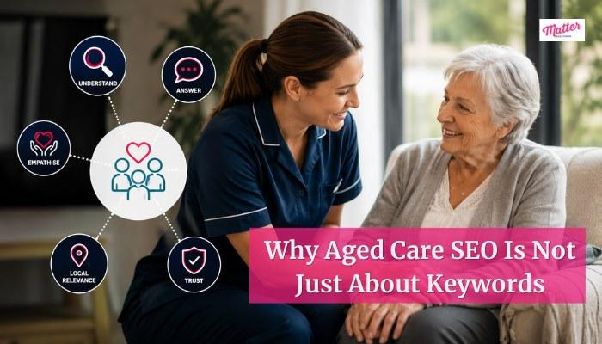
Aged care SEO falls short when it stops at keywords, because families don’t choose a provider based on where it appears in search results. They’re checking reviews, comparing local details, and looking for signs the provider can be trusted with someone they love.
Yet many aged care organisations and their SEO partners still treat keyword placement as the finish line. As a result, the signals families rely on, like reviews, location signals, and clear answers to their questions, take a back seat.
Our team at Matter Solutions has seen this play out firsthand, which is why we created this guide. It breaks down what strong aged care SEO actually involves and how each layer helps aged care businesses improve visibility and generate enquiries.
Read on to learn more.
Keywords Alone Don’t Reflect How Families Choose Aged Care
When families search for aged care, they’re weighing important questions about care needs, suitable providers, and whether it’s time for a move. That’s why they often search across multiple sessions, using different phrases at each stage.
One day it’s “aged care facilities near me” or “retirement living options in Brisbane.” A few days later it’s “what questions to ask an aged care provider,” as their understanding grows. Adult children of older parents usually lead this research, and the questions change as they do.
A keyword list built around a handful of phrases only catches one of those stages. Providers optimising for those terms alone capture the first search but miss many of the questions that influence the final decision.
Your Competitors Aren’t Outranking You on Keywords Alone
From our experience auditing aged care websites, most ranking gaps come down to technical SEO and local SEO rather than keywords. The sections below explain why.
They Have Stronger Technical Foundations Behind Their Pages
You may have better content than your competitors, but stronger technical SEO can still give them the advantage. It forms the foundation of your website’s search performance. This includes page speed, mobile usability, internal linking, and site structure.
Without these elements in place, search engines have a harder time crawling and understanding your pages. That’s why websites with solid technical foundations often outperform competitors in search results, even when the content is similar.
Their Local SEO Signals Tell Google Exactly Where They Serve
Families usually search for aged care close to home, so Google needs confidence about where your organisation provides services.
It builds that confidence by cross-referencing your business name, address, and service details across your website, Google Business Profile, and online directories. If those details are inconsistent, competitors with clearer local signals are more likely to appear in local search results.
Thin Content Fails Families at the Moment They Need Answers
Have you ever landed on a page that looked relevant, only to leave with the same questions you started with? That’s what thin content feels like. In aged care, this often happens when a page lists aged care services without explaining what they involve.
For example, a page that lists three care types in a single paragraph tells a family nothing about daily life, staff qualifications, or how admission works.
A page that answers those questions gives families something they can use. Instead of returning to Google for more information, they can continue exploring the provider because they’ve already started building trust in what they’re reading.
Don’t just list services. Explain the daily life, the staff qualifications, and how the admission process works. Detailed, helpful content builds trust immediately.
Reviews and Trust Signals Help Aged Care Providers Build Trust Online
Families searching for aged care want reassurance that others have had a positive experience and that the organisation is active, responsive, and legitimate. That’s why reviews and other trust signals play such an important role. They help families feel more confident about reaching out, while also strengthening your visibility in local search.
Here are the main ones to focus on:
- Positive Google Reviews: Potential clients want to hear from people who’ve experienced your care firsthand. Recent, genuine reviews help them understand what it’s like to receive care from your organisation. They also strengthen your local SEO by showing Google that your business is engaged and trusted.
- Staff Bios and Credentials: Introducing your main team members and their qualifications puts real people behind your services. It gives families more assurance before they make contact.
- Consistent Business Information: Your name, address, phone number, and service details should match across your website, Google Business Profile, and aged care directories. Inconsistent details make it harder for Google to verify your business and harder for families to trust what they’re reading.
Together, these signals help aged care providers build trust with both Google and the families they’re trying to reach. From our experience, providers that consistently strengthen these areas create a stronger online presence and give families more confidence to take the next step.
SEO Doesn’t End When Someone Clicks
Getting someone to click through to your website is just the start. The page they land on needs to help them find answers, understand your services, and feel confident enough to reach out. A website that loads slowly, works poorly on mobile, or hides important information can lose families before they ever reach out.
This is why SEO and website experience need to work together. Ranking in search results brings people to your site, but the experience they have afterwards determines whether that traffic becomes an enquiry. Clear service pages, visible contact options, and a simple path to action all support stronger lead generation.
Search rankings bring traffic, but user experience drives enquiries. A fast, mobile-friendly site with clear service pages and contact options is essential.
Creating an Aged Care SEO Strategy That Reaches Families at Every Step
Effective aged care SEO brings together technical foundations, local signals, content depth, and trust signals into one connected strategy. Care providers that address these areas consistently build stronger search visibility and attract more genuine enquiries over time.
If you’d like help developing an SEO strategy that covers each part of the process, our team at Matter Solutions can help. We work specifically with aged care organisations across Australia. Get in touch with us today.
Frequently Asked Questions
Families and providers often have questions that go beyond what a single article can cover. These are some of the most common ones we hear.
How is aged care SEO different from general digital marketing?
Aged care SEO targets a specific audience making high-stakes decisions, which means the approach looks different from broader digital marketing. It focuses on local search visibility, trust-building content, and reputation management rather than reaching as many people as possible. The goal is to connect with families who are actively looking for care.
Does aged care SEO go beyond search rankings?
Yes. Search rankings are only one measure of success. Effective aged care SEO also focuses on whether the right families find useful information, trust your organisation, and feel confident enough to contact you.
Can small aged care providers compete with larger organisations online?
Yes. Smaller providers can compete by focusing on specific locations, creating useful content, and building trust signals that larger organisations may overlook. A strong local SEO strategy can help smaller providers appear in searches from families looking for care nearby.