The End-of-Day Kitchen Reset Should Prepare the Room for Tomorrow
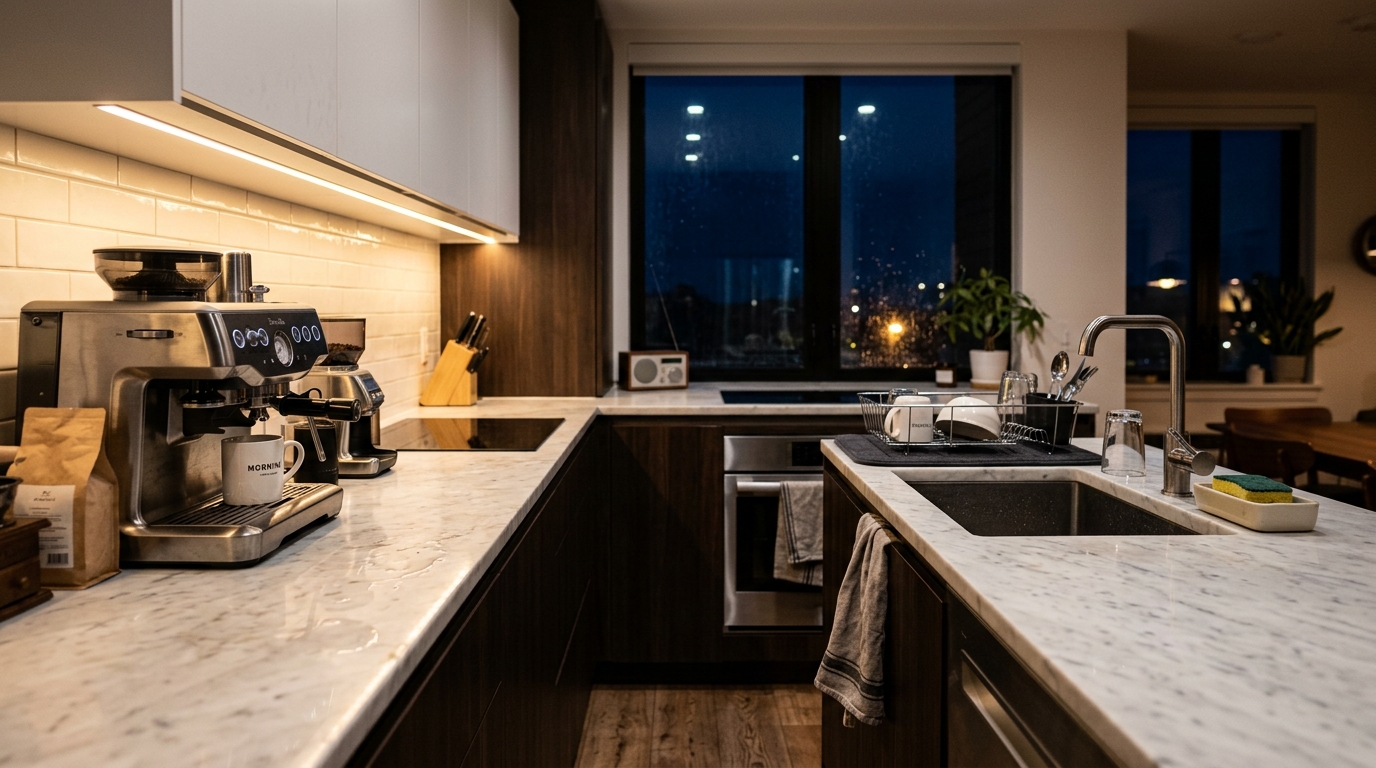
A kitchen does not need to look perfect at bedtime.
It needs to be ready to work again in the morning.
That distinction can make evening cleaning much easier.
Instead of trying to deep-clean the entire room after dinner, focus on the tasks that prevent tomorrow from starting on top of today’s residue. Clear the main preparation areas. Deal with food debris. Restore access to the sink. Remove rubbish that will become unpleasant overnight, and leave the floor free of obvious crumbs where people will walk first.
The goal is not a showroom finish.
It is a functional reset.
Start With Tomorrow’s First Task
Think about what usually happens first in the kitchen.
Someone makes coffee.
Breakfast begins.
A lunch gets packed.
Water bottles are filled.
That first activity needs a clear working surface.
If the counter is still covered with dinner dishes, food containers, mail, and cooking tools, tomorrow begins with cleanup before anything else can happen.
Choose one primary surface and make it usable before bed.
This creates a clean starting point without requiring every counter in the room to be empty.
Deal With Food Before Cosmetic Details
Food-related cleanup deserves priority because it can become harder or less pleasant if left overnight.
Put leftovers away appropriately.
Remove scraps and packaging.
Handle visible crumbs and spills.
A faint fingerprint on an appliance can usually wait.
A sticky food spill on the counter should not.
This simple ranking keeps the evening reset practical.
It focuses energy on what changes with time rather than what merely affects appearance.
Give the Sink a Clear Starting Position
A sink full of dishes makes the whole kitchen feel unfinished.
That does not mean every item must be polished and put away immediately, but the sink should be usable by morning.
Load the dishwasher where appropriate.
Wash or stack items that need separate attention.
Remove food debris from the basin.
Once the sink is accessible, the kitchen becomes easier to use even if a drying rack still contains clean dishes.
Function matters more than visual emptiness.
Restore the Main Preparation Zone
Most kitchens have one section where the majority of food preparation happens.
It may be beside the stove, near the sink, or on one end of an island.
That area deserves an end-of-day reset because it will probably be needed again first.
Remove cutting boards, packaging, and ingredients that no longer belong there.
Wipe away residue appropriate to the surface.
Do not spend twenty minutes clearing a decorative counter across the room while the main work zone remains blocked.
Tomorrow’s usefulness should guide tonight’s effort.
A Reset Can Be Judged by Readiness, Not Perfection
The best question at the end of the evening is not, “Does the kitchen look completely finished?”
Ask, “Can tomorrow begin without dealing with yesterday first?”
That readiness standard also gives house cleaning services raleigh nc a practical benchmark: the sink is accessible, the main preparation surface is open, food residue is removed, the busiest floor path is clear, and the room no longer carries unfinished tasks into the next day.
This creates a useful endpoint.
Once the kitchen is ready for its next use, the reset has done its job.
Do Not Let Dishes Hide the Counter
A few remaining dishes can occupy much more surface than expected.
Large pans, mixing bowls, serving pieces, and drying racks spread across counters quickly.
Group them deliberately.
If an item is clean and dry, put it away.
If it is soaking, keep it contained near the sink rather than allowing it to take over a separate work surface.
The goal is to preserve enough open counter space that breakfast or coffee preparation does not require another rearrangement.
Crumbs Should Not Wait for Morning Traffic
Loose food debris is easy to spread.
A few crumbs beneath the table can travel farther once people begin walking through the kitchen the next day.
Handle the obvious drop zones before bed.
Check under the main eating area, beside the counter, and around the stove if cooking produced loose debris.
There is usually no need for a complete floor treatment every night.
A targeted crumb pass can prevent a small mess from becoming a larger traffic pattern by morning.
Reset the Refrigerator-Door Area
The refrigerator is often one of the first appliances used the next day.
Check the immediate area around it.
Remove anything left on top of nearby counters.
Wipe an obvious spill if one occurred.
Look at the floor below for dropped food or packaging.
The door itself does not need detailed polishing every evening.
This is about making the refrigerator area usable and clear, not adding another cosmetic task to the checklist.
Take Rubbish Out of the Workflow
Kitchen rubbish can interfere with the next morning even if the bin is not completely full.
Food scraps, takeaway packaging, or strong-smelling waste may be better removed rather than left overnight.
At minimum, make sure rubbish is contained and no loose waste remains on counters or floors.
This also opens the path for the next day’s activity.
A bag waiting beside the door can quickly become another obstacle if bags, shoes, or groceries arrive before it leaves.
Leave the Coffee or Breakfast Zone Ready
If the morning follows a predictable pattern, use that to your advantage.
Keep the coffee maker area clear.
Make sure the kettle or breakfast-preparation section is not buried beneath unrelated items.
A few small choices at night can remove friction from the morning.
This is especially useful in busy kitchens where several people are trying to use the same room within a short period.
The reset should prepare for real habits rather than create an abstract standard of tidiness.
Stop Organizing Once Access Is Restored
Evening resets can easily turn into pantry organizing or drawer sorting.
That is rarely necessary.
If a utensil belongs in a drawer, put it away.
If the drawer itself is disorganized, leave that for another time.
The same rule applies to pantry shelves, food storage containers, and refrigerator organization.
Return obvious items.
Do not redesign storage at the end of a long day.
The purpose is to close today’s kitchen, not create a second project before bed.
Wipe the Surfaces That Actually Changed
Not every kitchen surface changes every day.
A prep counter used for dinner may need attention.
A quiet section holding only a decorative object may not.
The sink area may show water spots, while an upper cabinet front remains untouched.
Inspect according to use.
This prevents the reset from becoming a ritual of wiping every available surface whether it needs it or not.
Cleaning based on what actually changed is faster and more sensible.
Finish With the Main Walking Path
Once dishes, food, counters, and rubbish are handled, look at the floor.
Concentrate on the route people will use first in the morning.
That may run from the doorway to the refrigerator, sink, and coffee area.
Remove loose crumbs or visible debris along that path.
If the rest of the floor still looks fine, stop there.
A complete floor clean can remain on its normal schedule.
The evening reset is about making the room ready, not duplicating every deeper task.
Use a Five-Minute Closing Check
Before leaving the kitchen, take one final look.
Is the sink usable?
Is the main preparation zone open?
Is food stored appropriately?
Are obvious crumbs gone?
Is rubbish contained?
Can someone enter in the morning and begin the first task without moving yesterday’s things?
If yes, the room is ready.
This short check is more useful than adding another round of wiping simply because one tiny mark remains somewhere.
The Best Reset Reduces Morning Friction
An end-of-day kitchen reset should make tomorrow easier.
That is the measure that matters.
Clear the surfaces needed first. Deal with food before it becomes a bigger problem. Restore the sink, remove obvious debris, keep the main path open, and resist turning the process into organizing or deep cleaning.
A kitchen can still look lived in and be properly reset.
The goal is not to erase every sign of the day.
It is to keep today’s unfinished work from becoming tomorrow’s first chore.