Bridging Power Electronics and Chemical Processing: When Reactor Selection Meets Energy Efficiency
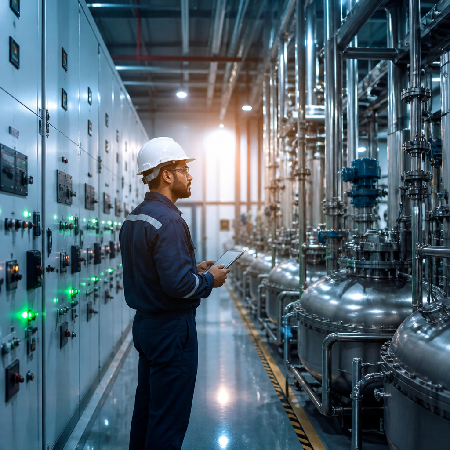
Chemical reactors consume significant electrical power, yet surprisingly few process engineers consider power conversion efficiency when specifying or purchasing reaction vessels. A 500-liter jacketed reactor with electric heating can draw 30 to 50 kW continuously during operation, while motors for agitation add another 5 to 15 kW depending on viscosity and mixing requirements. Over a reactor’s operational life, energy costs often exceed the initial capital investment, making the intersection of power electronics and reactor selection a critical but overlooked consideration.
The connection becomes even more pronounced in facilities transitioning to variable frequency drives, regenerative braking systems, or on-site renewable energy integration. The electrical characteristics of your reactor heating elements, motor controllers, and auxiliary equipment determine how efficiently you can leverage modern power conversion technologies. Understanding this relationship helps process engineers make smarter equipment decisions that pay dividends across both operational efficiency and capital deployment.
The Energy Profile of Modern Reaction Systems
Batch reactors present particularly complex power demands. A typical pharmaceutical synthesis reactor cycles through heating, exothermic reaction control, cooling, and agitation phases, each with distinct electrical requirements. Resistance heating elements operate at unity power factor but convert electricity to heat at the vessel jacket or coil, losing 10-15% to the surrounding environment. Heat transfer fluids add pumping loads, and modern systems increasingly use electric rather than steam heating for precise temperature control.
Agitation motors represent the second major electrical load. Traditional fixed-speed motors waste energy during low-viscosity phases, while variable frequency drives can reduce power consumption by 30-40% when full mixing intensity is not required. However, VFD compatibility depends on motor winding design and insulation class. Older reactor motors may generate bearing currents or insulation stress when retrofitted with modern drives, a consideration often missed during equipment procurement.
Heating System Electrical Architecture
Electric heating elements in jacketed reactors typically operate on three-phase power at 480V in North America or 400V in Europe. The element configuration—delta versus wye, single-point versus multi-zone—affects both efficiency and control precision. Multi-zone systems allow staged heating but require more complex power distribution and increase panel costs by $3,000 to $8,000. Single-zone systems are simpler but cannot compensate for thermal stratification in larger vessels.
Silicon-controlled rectifier controllers have largely replaced contactors for reactor heating, enabling proportional control and reducing thermal cycling stress. SCR systems introduce harmonic distortion into facility power, typically 15-25% total harmonic distortion, which may require line reactors or harmonic filters if multiple reactors operate simultaneously. This electrical infrastructure consideration rarely appears in reactor specifications but can add $15,000 to $40,000 in installation costs for a multi-reactor facility.
Hydrogenation Reactors and Power Density Challenges
Hydrogenation reactions present unique electrical demands due to pressure requirements and safety systems. High-pressure hydrogenation reactors need robust agitation to maintain hydrogen dispersion, with power-to-volume ratios reaching 5-8 kW per cubic meter compared to 2-4 kW for standard reactors. The combination of pressure vessel construction, specialized seals, and explosion-proof motors significantly increases both capital and operating costs. Safety considerations for high-pressure hydrogenation systems extend beyond mechanical design to electrical classification and power isolation requirements.
Explosion-proof motors for hazardous area classification carry 40-60% premiums over standard motors and impose restrictions on VFD compatibility. Purge and pressurization systems for motor enclosures add parasitic electrical loads of 1-2 kW per reactor. These seemingly minor draws accumulate across multi-reactor facilities, and engineers focused solely on reaction chemistry often overlook their contribution to facility power budgets.
Capital Equipment Strategy for Electrical Efficiency
When specifying new reactor capacity, process engineers face a capital allocation question: invest heavily in a new reactor with optimized electrical systems, or source quality used equipment and apply savings toward facility-level power improvements? New reactors can be specified with efficient motor designs, optimized heating zones, and VFD-ready components, but command premium prices that strain project budgets. The 18 to 24-month lead time for custom reactor fabrication also delays production capacity expansion.
Used and surplus reactor markets offer an alternative path that merits serious evaluation, particularly for established reaction processes. Facilities upgrading capacity or shutting down production lines release well-maintained equipment at substantial discounts. Process engineers can source glass-lined reactors, stainless vessels, or specialized hydrogenation systems from suppliers like International Process Plants (IPP), which maintains inventory of used batch reactors, pressure-rated vessels, and ancillary process equipment suitable for chemical and pharmaceutical manufacturing. The capital savings—often reaching 40-50% compared to new equipment—can fund substantial electrical infrastructure improvements including VFD installation, harmonic mitigation, or even on-site solar integration to reduce operating costs over the reactor’s remaining service life.
The key consideration is matching used reactor electrical specifications to facility infrastructure. A 316L stainless reactor with a 15 kW motor and 40 kW heating capacity requires verification that existing power distribution, motor control centers, and heating controllers can accommodate the load. Most used equipment predates modern energy codes, so budgeting for motor replacement or heating system upgrades may be necessary. Even with these modifications, total installed costs typically remain below new equipment pricing while delivery timelines compress dramatically.
Integrating Reactors with Facility Power Systems
Modern facilities increasingly incorporate renewable energy, energy storage, and demand response programs. Reactor electrical characteristics determine how well process equipment integrates with these systems. Reactors with thermal storage capacity—thick jacket walls or large fluid volumes—can shift heating loads to off-peak hours when electricity prices drop or solar generation peaks. This operational flexibility has monetary value in time-of-use rate structures but requires reactors capable of temperature hold without continuous power input.
Battery storage systems and reactors form an interesting partnership for facilities in regions with demand charges. A 100 kWh battery can shave reactor startup peaks, reducing monthly demand charges by $2,000 to $5,000 depending on utility rate structures. However, battery economics improve dramatically when reactors can modulate their loads. Fixed-speed legacy equipment offers limited flexibility, while reactors with VFD-controlled agitation and staged heating provide multiple dispatch points for load management.
Monitoring and Control Integration
Energy management requires measurement, and reactor power monitoring provides data for both process optimization and facility-level energy strategy. Modern energy monitoring systems can track reactor power consumption at sub-second resolution, correlating electrical draw with process parameters like temperature, pressure, and agitation speed. This data reveals inefficiencies invisible to process operators, such as excessive agitation power during low-viscosity phases or heating system cycling from poor insulation.
Control system integration extends beyond monitoring to active management. When connected to building management systems or demand response platforms, reactor controllers can automatically defer non-critical heating cycles, reduce agitation speeds during grid stress events, or prioritize reactor sequences based on real-time electricity pricing. The required infrastructure—Ethernet connectivity, Modbus or OPC UA protocol support, and compatible PLCs—should be specified during reactor procurement or verified when evaluating used equipment.
Calculating Total Electrical Cost of Ownership
Comprehensive reactor economic analysis must account for lifetime energy consumption alongside capital costs. A 1,000-liter reactor operating 4,000 hours annually with 45 kW average draw consumes 180,000 kWh per year. At industrial electricity rates of $0.08 to $0.12 per kWh, annual energy costs range from $14,400 to $21,600. Over a 15-year service life, energy costs total $216,000 to $324,000—potentially exceeding the reactor’s purchase price.
Efficiency improvements compound over this timeframe. Upgrading to a premium efficiency motor saves 3-5% of agitation power. Improving jacket insulation reduces heating energy by 8-12%. Installing a VFD and implementing speed optimization during low-viscosity phases cuts motor energy by 25-35%. These improvements cost $8,000 to $25,000 installed but generate $3,000 to $8,000 in annual savings, yielding payback periods of 2 to 4 years with 10+ years of continued benefit.
For facilities evaluating power system upgrades or expanding reactor capacity, this total-cost perspective transforms procurement strategy. A used reactor acquired at $120,000 instead of $250,000 new provides $130,000 in capital to invest in electrical infrastructure, premium efficiency motors, VFDs, and energy monitoring systems. The result is lower total installed cost and superior operational efficiency compared to purchasing new equipment with standard electrical specifications.
Making the Equipment Decision
Process engineers should evaluate reactor acquisition through both process and electrical lenses. Begin by quantifying the reactor’s electrical profile: heating power, motor load, auxiliary systems, and operating hours. Calculate annual energy consumption and cost, then model the impact of efficiency improvements. Compare the total cost of new equipment with standard electrical specifications against used equipment upgraded with efficient motors, VFDs, and modern controls.
For many applications, the used-equipment-plus-upgrades path delivers superior economics. The strategy works best for established processes where reactor requirements are well-defined and process validation timelines permit equipment modifications. It falters when novel chemistry demands custom reactor internals or when regulatory constraints require full equipment pedigree documentation. Each facility must weigh these factors against their specific constraints, but the intersection of reactor selection and energy efficiency deserves more attention than it typically receives in capital equipment decisions.